 Sample photo
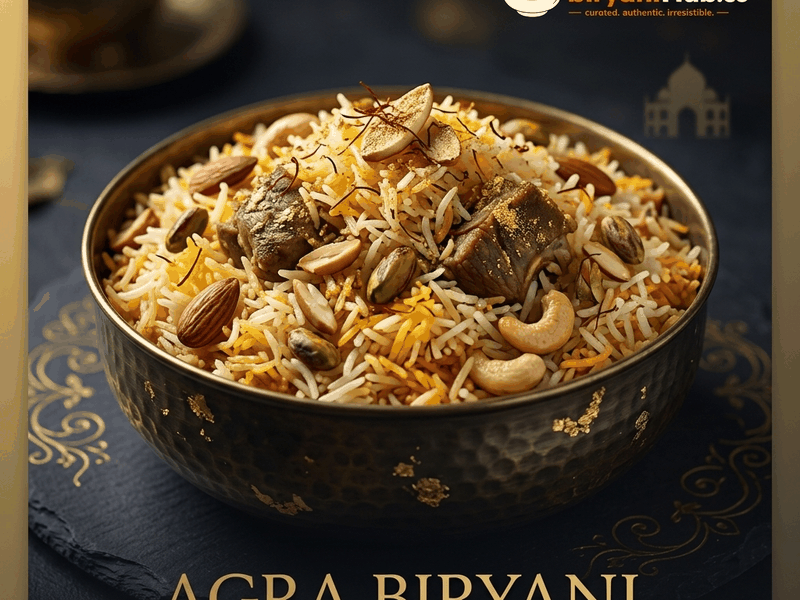
Agra Biryani
mild, sweet-aromatic, ghee-rich
Origin
Agra biryani comes from the city that hosted the Mughal court before Delhi did — the same culinary lineage as Delhi, but with subtle differences shaped by Agra's older Sufi food traditions and proximity to Awadh. When Akbar moved his court to Agra in the 1500s, the kitchens drew Persian, Central Asian, and Rajasthani cooks together; the biryani that emerged was a less heavily spiced cousin of Delhi's, with sweeter notes from the local jaggery and a touch of mawa (reduced milk) sometimes worked into the masala. The most famous purveyors today are still around the Taj Ganj and Sadar Bazaar — small kitchens that have been running for three generations.
What sets it apart
Identifying Agra biryani is harder than identifying Hyderabadi because it sits between two louder cousins. Look for a slightly sweet underlying note in the masala, sometimes from caramelized onion done very slowly, and a yellow-tinted rice that's still quite mild. The texture leans toward dry-and-separate rather than steamed-and-moist. Mutton is the preferred meat; the bones are kept in for richness and chewed at the table. Pair with a green-chili pickle and a thick yogurt raita with cumin. Agra biryani is hard to find on US menus by name — it usually gets grouped under 'Mughlai biryani' — but a Mughlai-leaning restaurant whose chef trained around Lucknow or Agra will often serve something closer to this style than to Delhi's. Worth asking the chef directly.
Cook method
pukki
Rice
long-grain basmati
Typical meats
mutton, chicken, vegetable
Key ingredients
dry fruits, kewra, ghee, cardamom, mace
Pairs with
shahi tukda, mughlai chutney