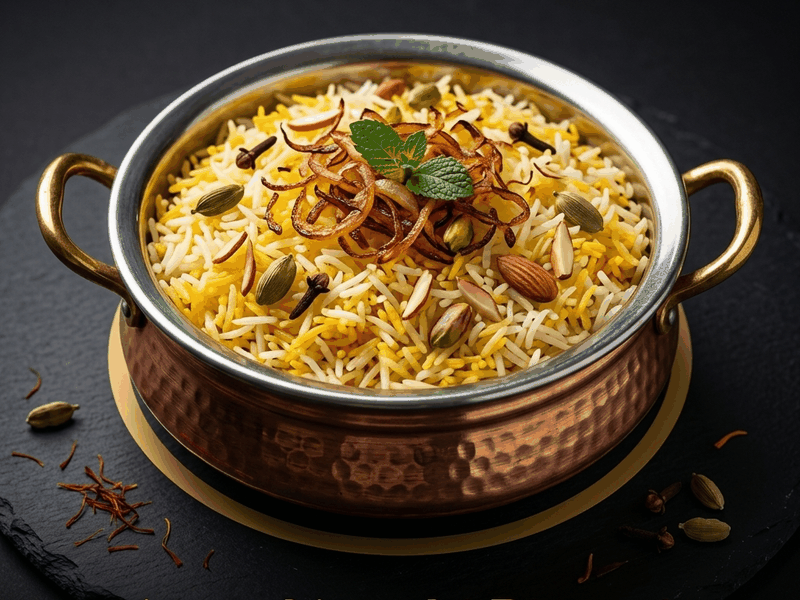
 Sample photo
Arcot (Nawabi) Biryani
medium, tangy, light-aromatic
Origin
Arcot biryani comes from the Arcot region in northern Tamil Nadu, just west of Chennai, and was the original Nawab-of-Arcot court biryani — the same Nawab who later gave his name to Ambur biryani thirty kilometers down the road. The Arcot Nawabs were Persian-descended rulers installed by the Mughals to govern the Carnatic; their kitchens drew Mughal, Persian, and Tamil Muslim influences together. Modern Arcot biryani is a quieter cousin of Ambur — same rice, lighter spicing, no aggressive chili. It is a dying style today, kept alive by a handful of family kitchens in Arcot town itself and a few migrants who carried the recipe to Chennai and Tirupati.
What sets it apart
Recognizing Arcot biryani is hard because so few places serve it commercially. Look for these markers: seeraga samba rice (same as Ambur), but a paler color from less chili; a milder masala that lets the goat-meat flavor stand on its own; cardamom and clove are forward, but kalpasi and pepper are restrained. The portion sizes tend to be small — single-pot home-cooking proportions rather than commercial-kitchen mountains. Pair with a thin onion-tomato curry and lime pickle. In the US, you will almost never see Arcot biryani on a menu by name — your best bet is asking at Tamil-Muslim-owned restaurants whether the chef knows the style. The closest commercial equivalent is a milder Ambur. If you're ever in the actual town of Arcot, the small biryani houses near the dargah are still cooking the real thing.
Cook method
pukki
Rice
seeraga samba
Typical meats
mutton, chicken
Key ingredients
yogurt marinade, seeraga samba rice, ghee, ginger-garlic, green chili
Pairs with
dalcha, brinjal pachadi, raita