 Sample photo
Bhatkali (Navayath) Biryani
spicy, tangy, onion-and-tomato forward
Origin
Bhatkali biryani comes from the coastal town of Bhatkal in Karnataka's Uttara Kannada district, where the Navayath Muslim community — descended from Arab traders who settled the Konkan coast a thousand years ago — developed a biryani unlike any other in India. Bhatkal sat on the maritime route between Arabia and the Malabar coast, and the local cuisine reflects that: more onion-tomato masala than ghee, no saffron, and a flat refusal to do the Mughal layered-rice technique. The result is closer to a wet pulao than a dum biryani, and Bhatkali families serve it at every wedding, eid, and Friday lunch in the town.
What sets it apart
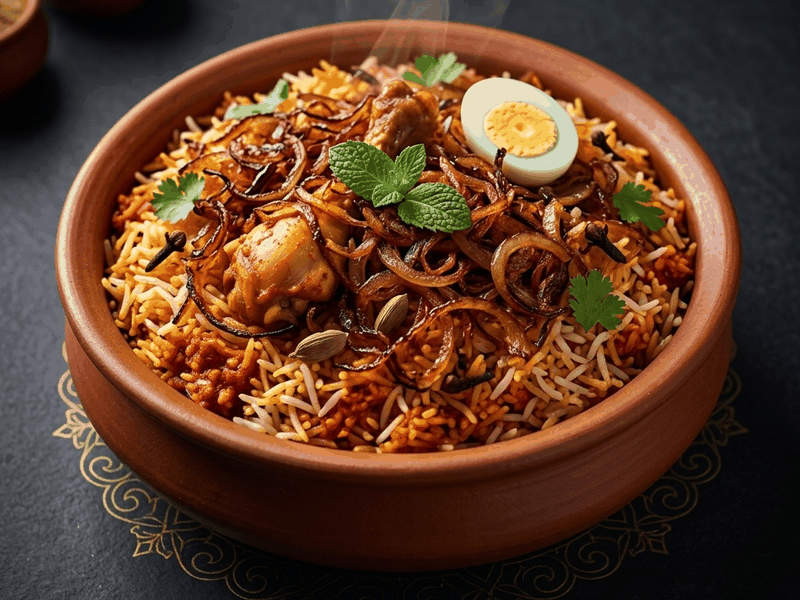
Recognizing Bhatkali biryani: the rice is cooked with the meat from the start (no separate par-boiling), so the grains absorb a deeply tomato-tinted red color throughout. The masala is heavy with green chili, onion, ginger, garlic, and coriander — no cardamom-rose-saffron palate at all. Chicken is most common; the Navayath variant sometimes uses prawn. The biryani is wet, almost stew-like, and tangy. Pair with raita and a side of mango pickle. In the US, Bhatkali biryani is rare on menus by name, but Navayath-owned restaurants in the Bay Area, Houston, Chicago, and parts of the Persian Gulf serve it. A few Pakistani restaurants in Houston serve a Karachi-Bhatkali variant brought by migrants. If you see 'Bhatkal' or 'Navayath' on a menu, order it — it's a style most Indian food lovers haven't encountered yet.
Cook method
dum
Rice
long-grain basmati
Typical meats
chicken, mutton, fish
Key ingredients
red onion masala, tomato, green chili, fresh coriander, yogurt
Pairs with
raita, fried fish, salan