 Sample photo
Bombay Biryani
tangy, slightly sweet, mid-spicy
Origin
Bombay biryani is the street-food evolution of the dish. It was popularized by Mumbai's Memon and Bohra Muslim communities — both originally from Gujarat and Sindh, who migrated to Bombay in the late 1800s for trade and brought their own pulao and biryani traditions with them. As Bombay urbanized, those styles fused: the result was a tangier, slightly sweeter biryani designed for quick lunches in the docks and trading bazaars of South Bombay. By the mid-1900s, places like Britannia & Co. (founded 1923) and Sarvi (1953) had made the dish a Bombay icon. Britannia's berry-pulao variant — with Iranian zereshk berries — is still flown in from Iran weekly and is arguably the city's most photographed dish.
What sets it apart
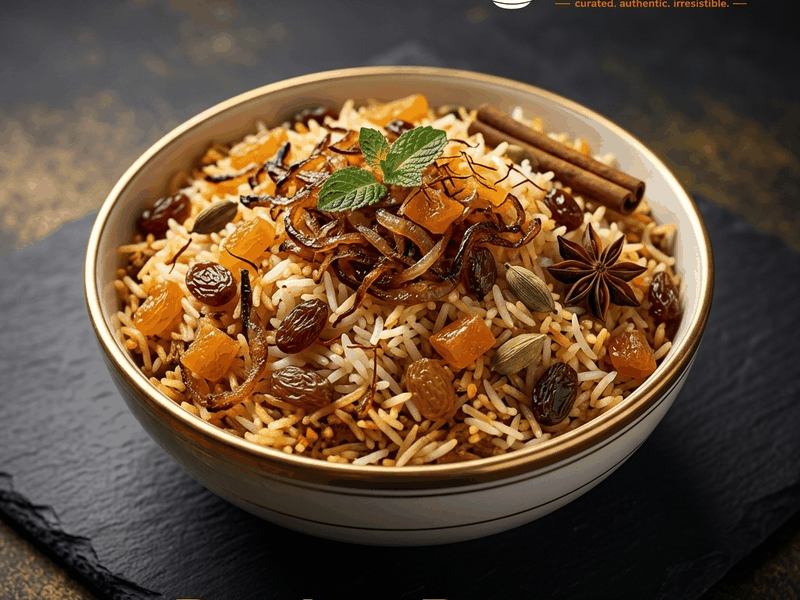
What identifies Bombay biryani: tomato and tamarind are visibly present in the masala (no other major biryani style includes them), giving a tangy edge; the rice tends toward yellow-saffron color throughout, and potatoes are common but not mandatory. The masala is sweeter than Hyderabadi but spicier than Lucknowi — a middle path. Chicken and mutton are equally common; some Memon households make a fish version. Pair with cachumber salad (Bombay's tomato-onion-cucumber chop), papad, and chutney. In the US, look for Bombay biryani at Parsi-owned or Memon-owned restaurants — the Bay Area, NYC tri-state, and a couple of Chicago kitchens serve it. If the menu lists 'Memoni' or 'Bohra' biryani as well, you're at the right place.
Cook method
pukki
Rice
long-grain basmati
Typical meats
mutton, chicken
Key ingredients
tomato, potato, dried plum (aloo bukhara), fried onions, yogurt
Pairs with
raita, kachumber, lassi