 Sample photo
Kolkata Biryani
mild, sweet, fragrant — distinctly low heat
Origin
Kolkata biryani has the most cinematic origin story in Indian food history. In 1856 the British exiled Wajid Ali Shah — the last nawab of Awadh and a famed gourmand — from Lucknow to Metiabruz, then a fishing village outside Calcutta. The nawab took his cooks, musicians, and dancers with him, and tried to recreate the Awadh court in exile. As his finances dwindled, his cooks adapted the lavish Lucknowi biryani for smaller budgets by stretching the meat with potatoes — and that improvisation became the defining feature of the new style. By the late 1800s the Metiabruz quarter had its own biryani culture, and from there the dish spread across Calcutta. Royal Indian Hotel in central Kolkata (founded 1905) and Aminia (1929) are still the canonical addresses.
What sets it apart
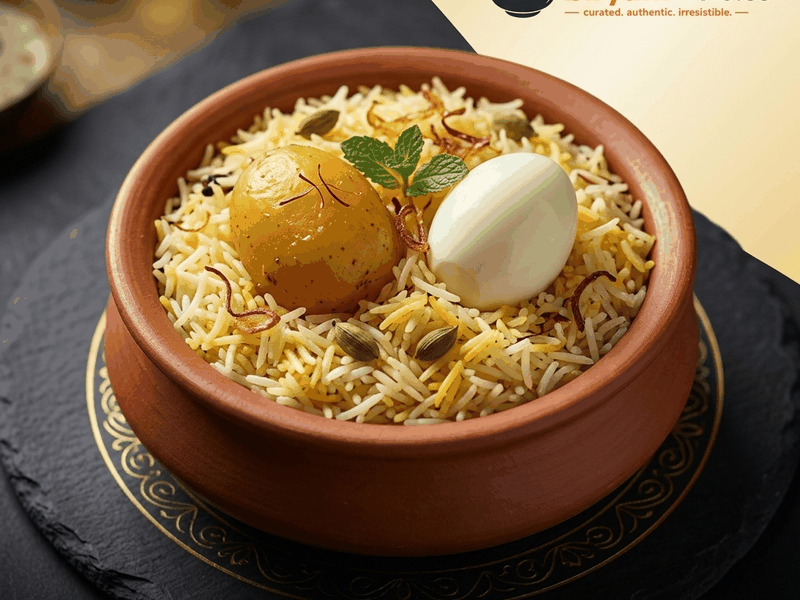
Kolkata biryani is the easiest to recognize: a large chunk of potato is layered in with the meat, sometimes a boiled egg as well. The color is paler and the spicing is milder than any other major Indian biryani — the influence of Bengali sweetness comes through, with rose water, kewra, and a hint of jaiphal (nutmeg). The rice is long-grain basmati, fluffy, dry, and well-separated. Mutton is the classic; the meat falls off the bone. Pair with a Bengali-style chutney (often green mango or tamarind), a thin onion-cucumber salad, and absolutely a wedge of lime. In the US, look for Kolkata biryani at Bengali-owned restaurants — Brooklyn, Queens, Chicago's Devon Avenue corridor. The potato is the giveaway: if there's a fist-sized potato in your biryani, you're eating Kolkata-style.
Cook method
pukki
Rice
long-grain basmati
Typical meats
mutton, chicken
Key ingredients
potato, boiled egg, kewra water, rose water, ghee, nutmeg, mace
Pairs with
chaap, salan, mishti doi